Mont-Saint-Guibert, Belgium, March 17, 2025: AstraZeneca has entered into a definitive agreement to acquire EsoBiotec, a biotechnology company pioneering in vivo cell therapies that has demonstrated promising early clinical activity.
EsoBiotec is a leading in vivo cell therapy company with the mission to make these innovative treatments more accessible, effective and affordable. By engineering immune cells directly within the patient’s body, EsoBiotec is eliminating the barriers of traditional cell therapies and unlocking new possibilities for oncology and immune-mediated diseases.
The EsoBiotec Engineered NanoBody Lentiviral (ENaBL) platform empowers the immune system to attack cancers and could offer many more patients access to transformative cell therapy treatments delivered in just minutes rather than the current process which takes weeks.
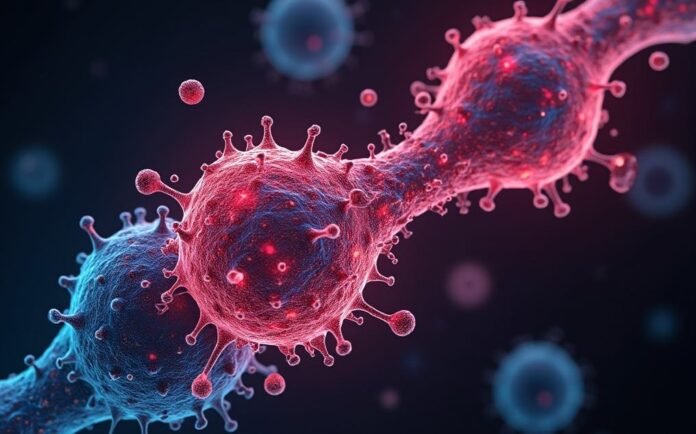
ENaBL uses highly targeted lentiviruses to deliver genetic instructions to specific immune cells, such as T cells, which programme them to recognise and destroy tumour cells for cancer treatment or autoreactive cells for potential use in immune-mediated diseases. This approach enables cell therapies to be administered through a simple IV injection and without the need for immune cell depletion.
Traditional cell therapies require cells to be removed from a patient, genetically modified outside the body, and then readministered to the patient as a medicine after immune cell depletion, typically taking weeks. By engineering immune cells directly within the patient’s body, the EsoBiotec in vivo approach has the potential to address many of the barriers associated with traditional cell therapies, reducing complexities and manufacturing timelines, thereby increasing access for patients.
AstraZeneca will acquire all outstanding equity of EsoBiotec for a total consideration of up to $1bn, on a cash and debt free basis. This will include an initial payment of $425m on deal closing, and up to $575m in contingent consideration based on development and regulatory milestones.
The transaction is expected to close in the second quarter of 2025, subject to customary closing conditions and regulatory clearances. The transaction does not impact AstraZeneca’s financial guidance for 2025.
The acquisition is part of AstraZeneca’s ambition to realise the full potential of cell therapies. Towards this it is also building world-class cell therapy capabilities and advancing a broad pipeline of cell therapies, enabled by technologies including chimeric antigen receptor T-cells (CAR T), T-cell receptor therapies (TCR T) and CAR T regulatory (CAR Tregs) cells.
Susan Galbraith, Executive Vice President, Oncology Haematology R&D, AstraZeneca, said: “We are excited about the acquisition of EsoBiotec and the opportunity to rapidly advance their promising in vivo platform. We believe it has the potential to transform cell therapy and will enable us to scale these innovative treatments so that many more patients around the world can access them. EsoBiotec will accelerate and expand the impact of our recent investments and marks a major step forward in realising our ambition to harness the full potential of cell therapy.”
Jean-Pierre Latere, CEO, EsoBiotec, said: “We look forward to working with AstraZeneca, a global leader in drug development, to advance our shared goal of bringing transformative cost-effective cell therapies to more patients globally. By combining our expertise and resources, we can accelerate the development of our in vivo platform which has a novel delivery technology we believe will have broad therapeutic applicability.”
EsoBiotec will become a wholly owned subsidiary of AstraZeneca, with operations in Belgium.